
Learn
How valuation and rules-based investing work
Hands-on guides to valuing a stock, screening and backtesting, building a ranking system, simulating a strategy and following a house strategy in Stoxa. Then the theory and formulas behind every number, in two groups: valuation, in the order the engine applies it, and rules-based investing, from point-in-time data to the house strategies.
Using Stoxa
-
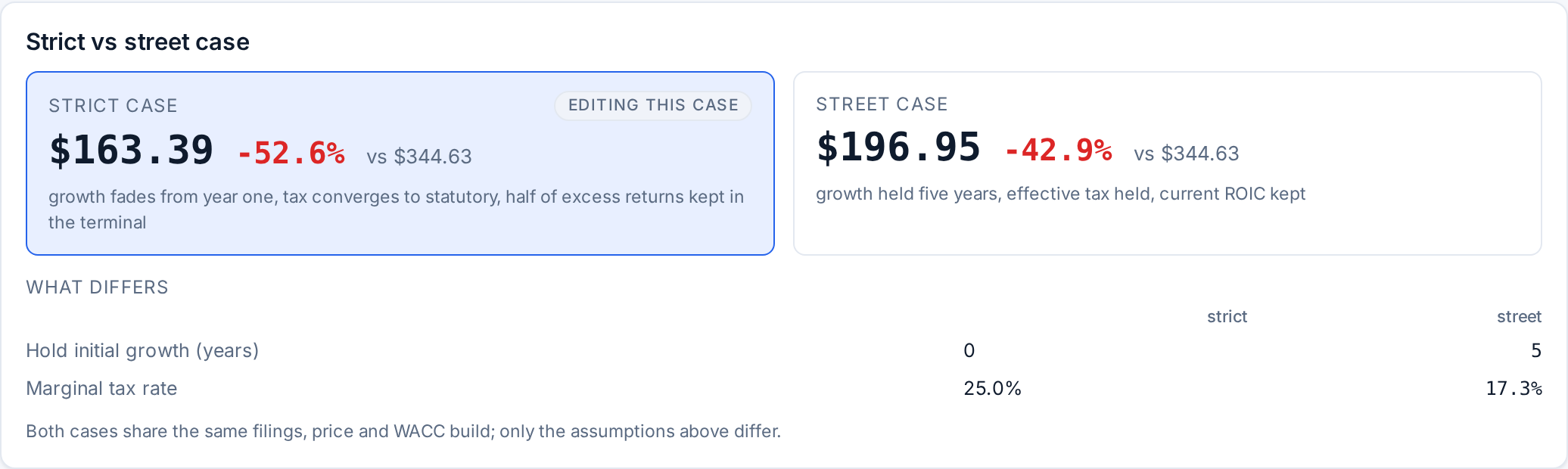 How to value a stock in StoxaA step-by-step walkthrough of the valuation workbench: find a company, check its filings, set assumptions, and read value, margin of safety, sensitivity and Monte Carlo.
-
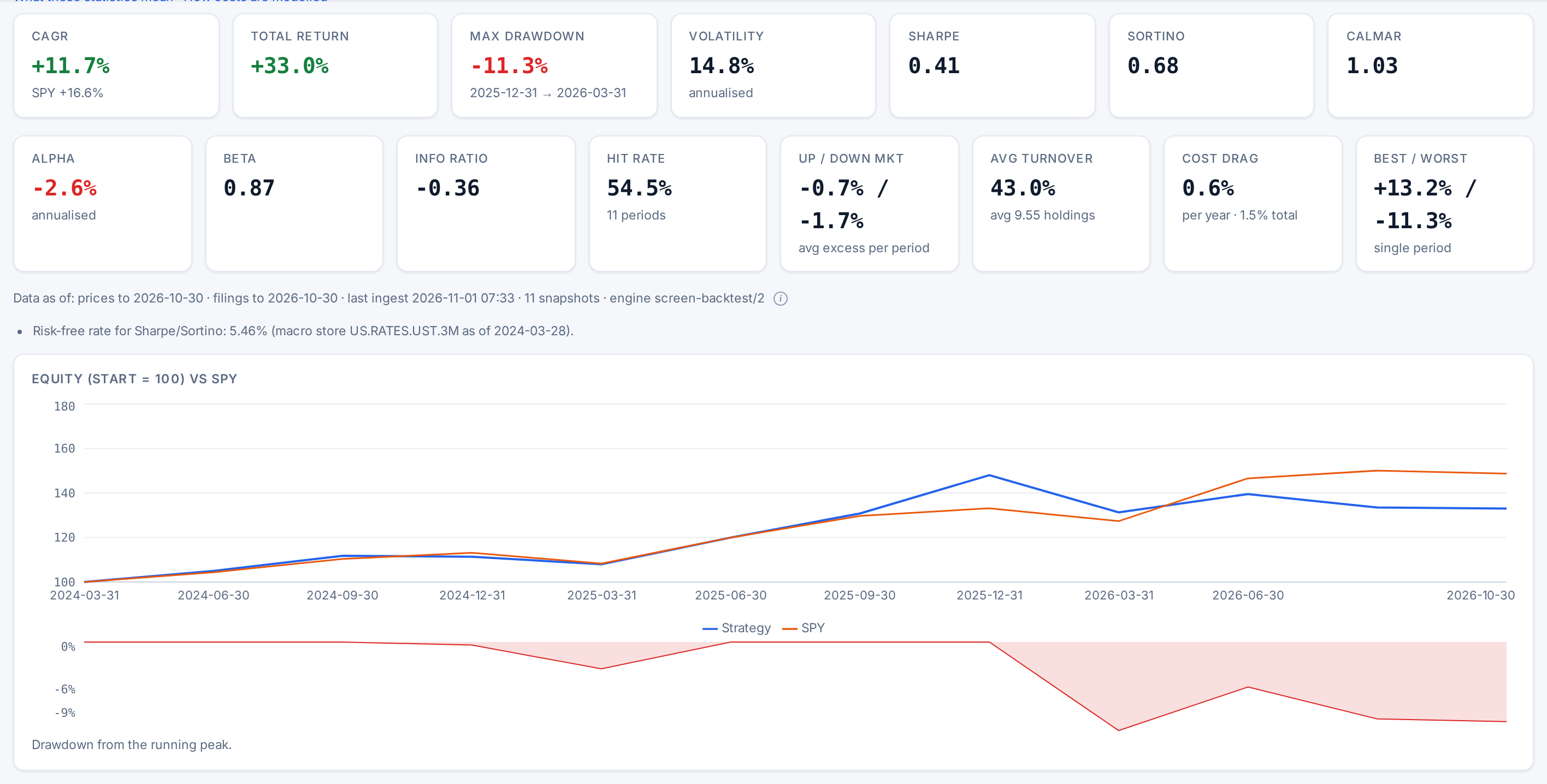 How to screen and backtest in StoxaBuild a stock screen on a universe, read the funnel counts, run it on any past date, then backtest it with dividends, trading costs and a benchmark, and read the statistics, drawdown and rolling results.
-
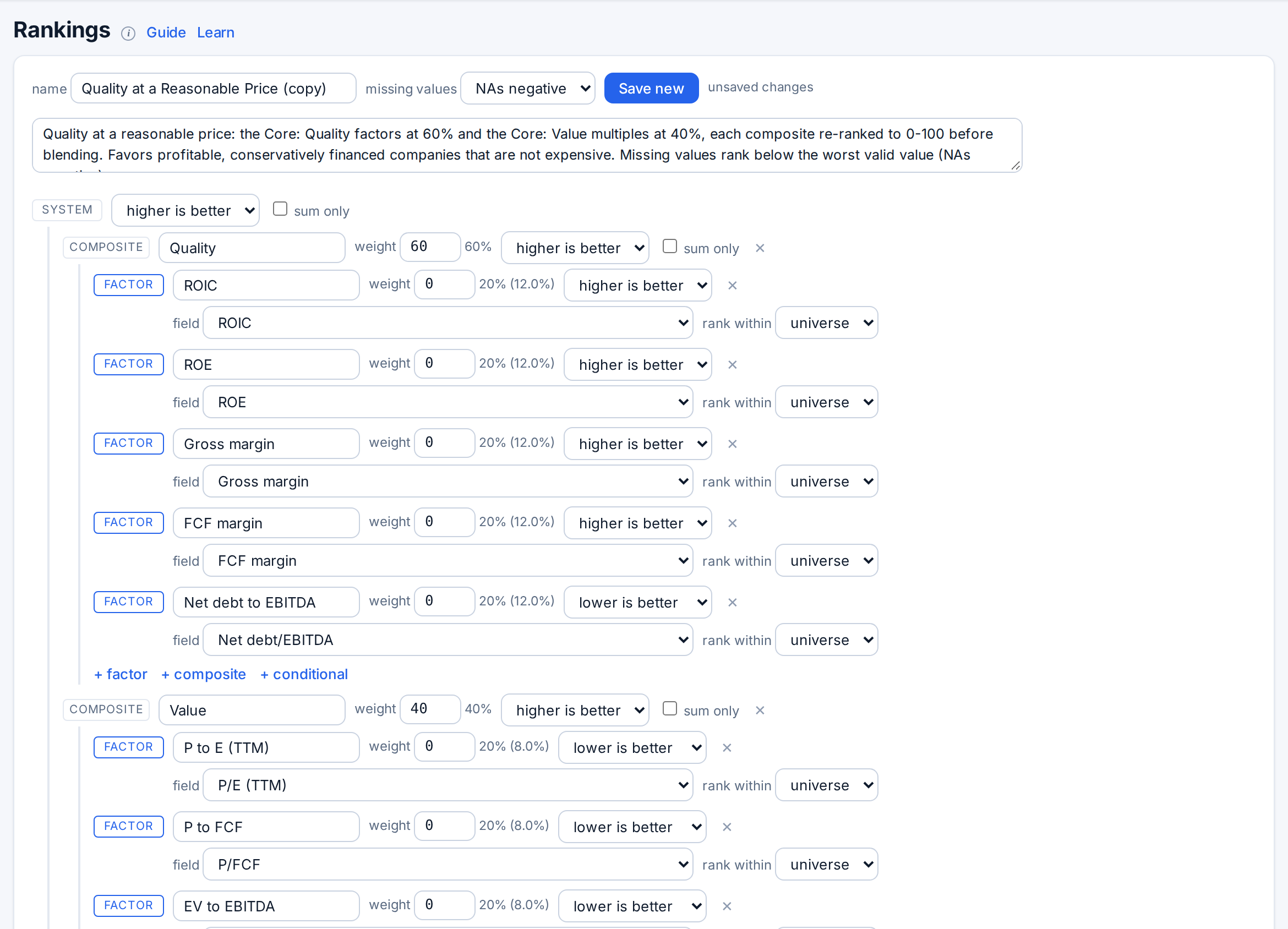 How to build a ranking system in StoxaBuild a ranking tree of factors and composites, choose directions, scopes and NA policies, test it with the bucket test, and use the rank in a screen or backtest.
-
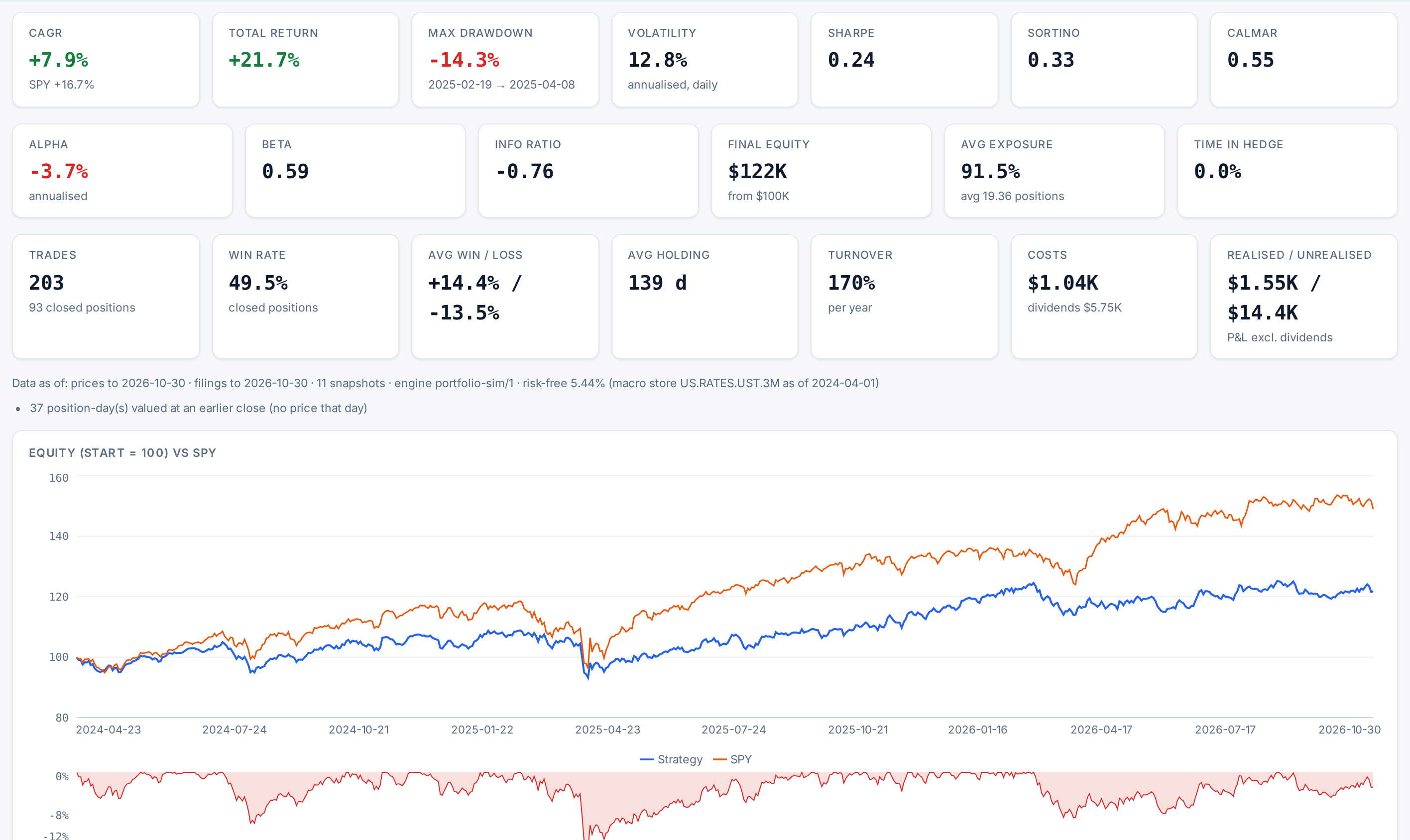 How to simulate a strategy in StoxaRun a screen and a ranking as a real portfolio: buy rules, sell rules, positions and caps, stops, a hedge sleeve and costs, then read the equity curve, drawdown, statistics and trades.
-
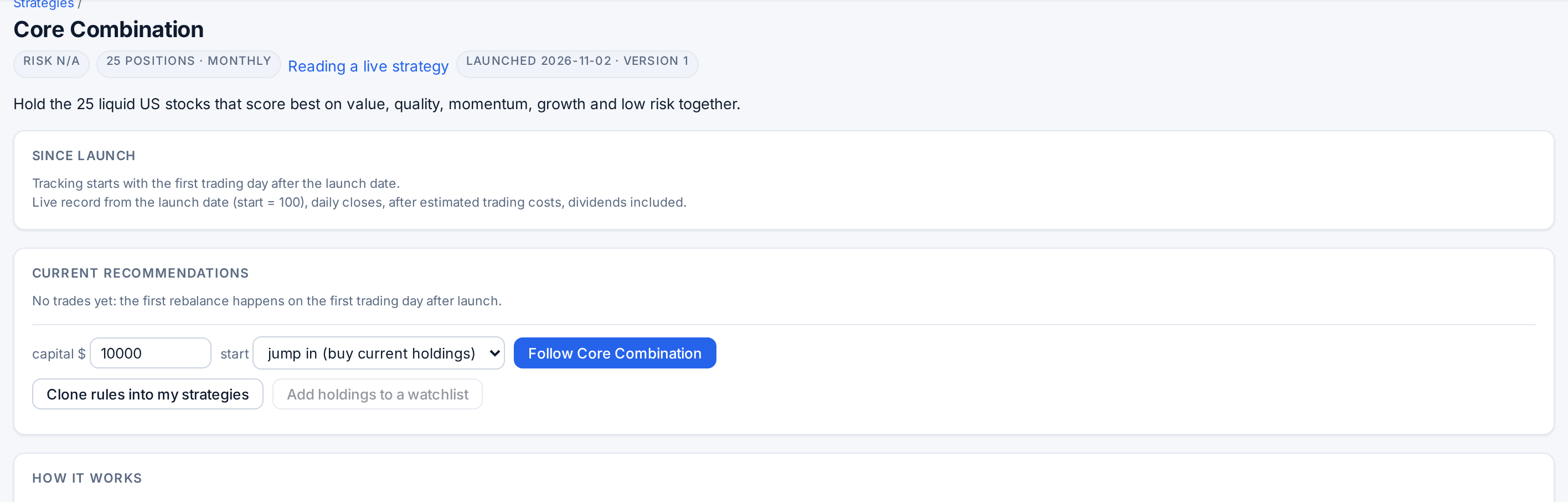 How to follow a house strategy in StoxaRead a house strategy page, its risk score and trading commitment, follow it with a paper portfolio (jump in or scale in), keep it in step with the drift badge and rebalance diff, or clone its rules.
The theory: valuation
- Value versus priceWhat intrinsic valuation tries to do and how to read the result.
- Free cash flow to the firmThe cash flow the DCF discounts, and how each forecast year is built.
- Growth, margin and tax pathsHow the drivers move from today’s numbers to steady state.
- ReinvestmentGrowth is not free: the capital a company must spend to grow.
- Discount rate: cost of equity and WACCCAPM, beta estimation, synthetic ratings and the weighted average.
- Terminal valueValuing everything after the forecast horizon, and why it dominates.
- From enterprise value to a share priceSubtract what lenders own, add what the business does not need, divide.
- Reverse DCF: what the price impliesSolve the model backwards to find the growth the market is paying for.
- Relative valuationPricing against peers and the company’s own history.
- Dividend discount modelEquity valued from the cash actually paid to shareholders.
- Residual income modelBook value plus the value of earning more than the cost of equity.
- Sensitivity, Monte Carlo and price pathsTurning a point estimate into a range you can act on.
- Reading the warningsEvery check the engine runs, what triggers it and what to change.
The theory: rules-based investing
- Point-in-time data and backtestingOnly using what was known on the date, so backtests do not cheat.
- Screening: universes, funnels and fair comparisonsWhat a screen is and is not, liquidity floors, relative-to-industry fields and survivorship.
- Ranking systems and the bucket testPercentile ranks, composite trees, NA policies, scope, and how to test that a ranking works.
- Reading a backtest: every statisticTotal return, CAGR, volatility, Sharpe, Sortino, drawdown, beta, alpha, turnover, cost drag and rolling tests.
- Transaction costs: why they decide whether a strategy is realCommissions, slippage tiers by liquidity, the square-root impact model, and turnover times cost.
- Portfolio simulation: rules, stops and hedgesBuy and sell rules, the daily loop, position sizing, stops, hedging, and what is not modelled.
- Reading a live strategyBacktest versus live record, risk score, trading commitment, capacity, drift, and patience.
- The eight house strategiesThe idea, the origin, the exact rules as implemented and what can go wrong, for each one.
Books: the reading list, from first read to deepest reference →